

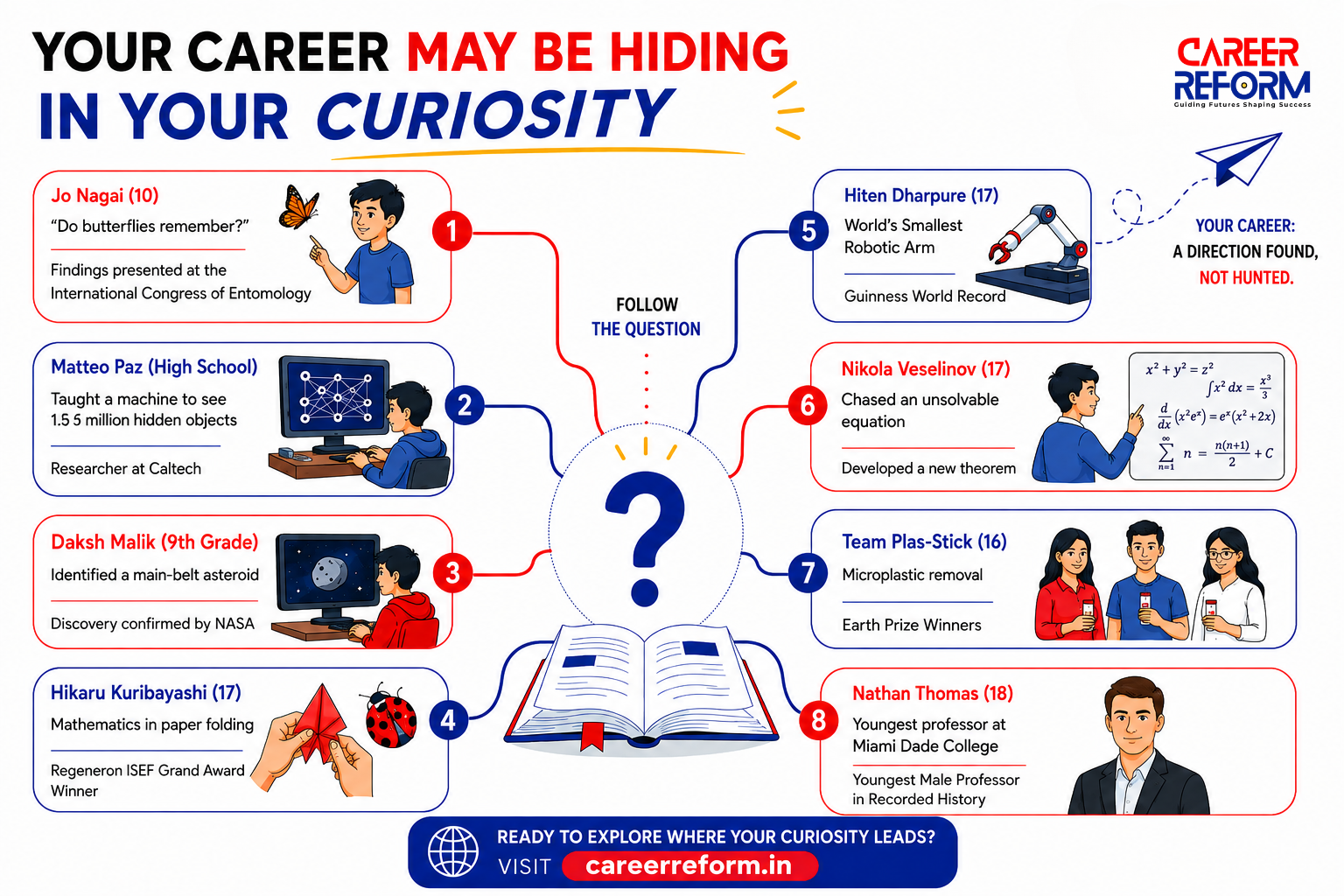
8 Young People Who Followed a Question—and Discovered a Direction
There is a quiet myth we tell young people about careers: that they arrive fully formed, chosen from a list, planned out on a whiteboard somewhere between a guidance counsellor’s office and a university prospectus. But the eight stories below suggest something far less tidy and far more hopeful. In each case, a career did not begin with a five-year plan. It began with a single, stubborn question a young person refused to let go of—why do my butterflies come back to me? How does a leaf fold? What is that light in the sky?
None of these young people set out to build a résumé. They set out to satisfy their own curiosity. The direction came later, almost as a side effect. That is, perhaps, the most useful career advice there is: stop hunting for the destination, and start following the question that will not leave you alone.
Quick Look
| # | Name | The Question | Curiosity → Field |
| 1 | Jo Nagai | Do butterflies remember? | Animal Science |
| 2 | Hikaru Kuribayashi | How does a folded structure move? | Mathematics & Engineering |
| 3 | Hiten Dharpure | How small can a machine become? | Engineering |
| 4 | Matteo Paz | What’s hiding in old space data? | AI & Astrophysics |
| 5 | Nathan Thomas | What’s next? | Engineering + Law |
| 6 | Daksh Malik | Could I discover an asteroid? | Astronomy |
| 7 | Nikola Veselinov | Why can’t some equations be solved? | Mathematics |
| 8 | Team Plas-Stick | Can we remove microplastics cheaply? | Environmental Innovation |
1. Jo Nagai — The Ten-Year-Old Who Asked If Butterflies Remember
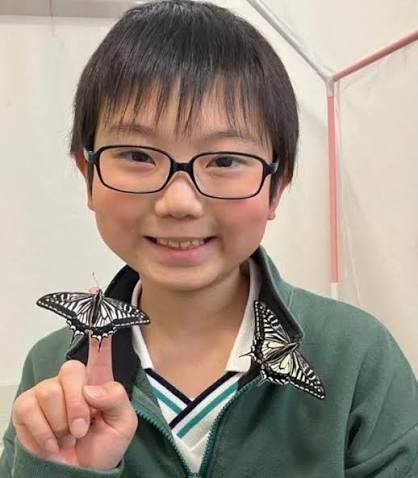
Jo Nagai, a grade-school student from Kobe, Japan, had been raising Asian swallowtail butterflies at home. He noticed something curious: after releasing his hand-raised butterflies into the wild, they would linger nearby before flying off — almost as if they recognized him. That became a question he couldn’t shake: could a butterfly retain memories from its life as a caterpillar, despite the total physical transformation of metamorphosis?
As a second-grader, he found the work of Georgetown entomologist Dr. Martha Weiss. He wrote her a detailed letter asking how her experiment might be adapted for his own butterflies. She wrote back. Over two years, Jo conducted his own experiments at home and eventually presented his findings — that certain memories may survive metamorphosis — to professional entomologists at the International Congress of Entomology in Kobe.
Academic background: Student at Ibuki East Elementary School, Kobe; scholar of the Son Masayoshi Philanthropic Foundation; compiled a 33-page research report presented at the 2024 International Congress of Entomology.
Strengths & traits: Meticulous, multi-year observation; the initiative to contact a working scientist directly and adapt her methods for a home setting.
Values & motivation: Driven by genuine affection for the animals he raised, not recognition — his stated goal of becoming a veterinarian points to the same root motivation.
Career signals:
-
- Returns to the same unanswered question for years, not just a passing curiosity.
- Draws real energy from caring for a specific kind of living thing — an early marker for biology or veterinary-adjacent work.
2. Hikaru Kuribayashi — The Teenager Who Saw Mathematics in a Paper Fold
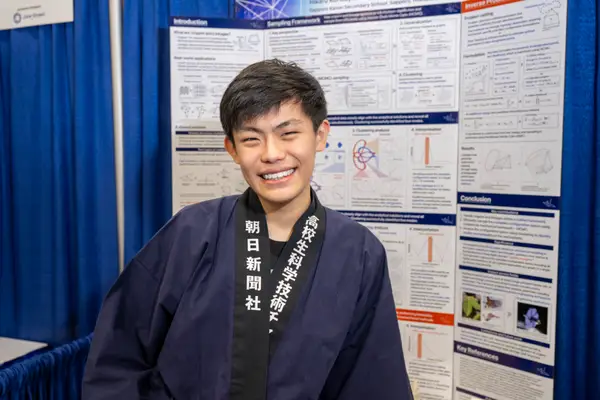
Hikaru Kuribayashi, a 17-year-old from Sapporo, Japan, grew up steeped in both origami and modern engineering. For him, folded paper became a question of pure mathematics: how do you predict, with total precision, every possible way a folded structure can move?
Instead of using known tools, Hikaru built an original simulation method — later shown to model natural folds like a ladybug’s wing — and won the George D. Yancopoulos Innovator Award and its $100,000 prize at the 2026 Regeneron ISEF, the world’s largest pre-college science fair. His work has real engineering implications, from foldable spacecraft panels to collapsible medical devices.
Academic background: Sixth-year student at Sapporo Kaisei Secondary School, an IB-program Super Science High School; independently developed a Markov Chain Monte Carlo sampling technique; won the fair’s top overall prize plus first place in physics.
Strengths & traits: Built an entirely new computational method rather than searching for an existing one; moves fluidly between abstract math and physical objects.
Values & motivation: Believes nature has already solved engineering problems humans are still working on, and that studying those solutions honestly is more elegant than reinventing them.
Career signals:
- Fascinated by how things move, not just how they look — a common early marker for applied math or mechanical engineering.
- Chose to build an original tool over using an existing one — a stronger signal for research-track careers.
3. Hiten Dharpure — The Boy Who Turned His Bedroom Into a Micro-Engineering Lab
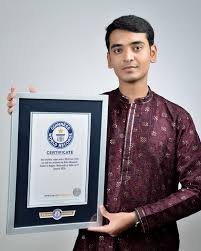
In Nagpur, India, 17-year-old Hiten Dharpure had no access to a state-of-the-art lab — just a cluttered bedroom and a refusal to accept that serious engineering required serious institutions. His question was about extremes: how small could a fully functional machine actually be?
He designed, coded, and 3D-printed a device barely bigger than a paperclip, enduring dozens of failed prototypes along the way. In 2026, his creation — just 39.25 millimetres — officially broke the Guinness World Record for the world’s smallest robotic arm, his second global record after previously building the world’s smallest weather station.
Academic background: Class 12 student at School of Scholars, Nagpur; self-taught in TinyML, Arduino microcontrollers, and FDM 3D printing.
Strengths & traits: Hands-on engineering fluency through direct trial and error; resourcefulness working entirely from a home workshop.
Values & motivation: Wants to prove that “ultra-precision micro-manufacturing does not require a big, high-level laboratory” — motivated by showing under-resourced students that world-class innovation is reachable.
Career signals:
- Gets his energy from making physical things work with his hands — a clear signal toward hardware, robotics, or embedded systems
- Treats constraint as a design problem to solve, not a reason to stop — common in founders and bootstrapped innovators
4. Matteo Paz — The High Schooler Who Taught a Machine to See 1.5 Million Hidden Objects
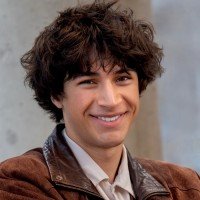
Matteo Paz’s curiosity about the night sky began with his mother taking him to public stargazing lectures at Caltech. By high school, that fascination had become something more ambitious: a determination to see what no one else had noticed in the universe’s oldest datasets.
Mentored by Caltech astrophysicist Davy Kirkpatrick, Paz built his own machine-learning algorithm to search 200 billion infrared measurements from NASA’s retired NEOWISE telescope. In six weeks, his model surfaced 1.5 million previously unknown objects in space. His method was published in The Astronomical Journal and won the top $250,000 prize at the 2025 Regeneron Science Talent Search.
Academic background: Joined Caltech’s Planet Finder Academy in high school; now works part-time at Caltech continuing the research.
Strengths & traits: Combines machine learning and observational astrophysics well enough to build original tools; comfortable with datasets too massive for manual analysis.
Values & motivation: More motivated by building tools that let an entire field discover more than by the thrill of one personal discovery.
Career signals:
- Drawn to open-ended problems with no known answer yet, rather than well-defined tasks — a classic research-career signal.
- Combines two distinct toolkits (coding and domain science) instead of specializing in just one.
5. Nathan Thomas — The Kid Who Never Stopped Asking “What’s Next?”
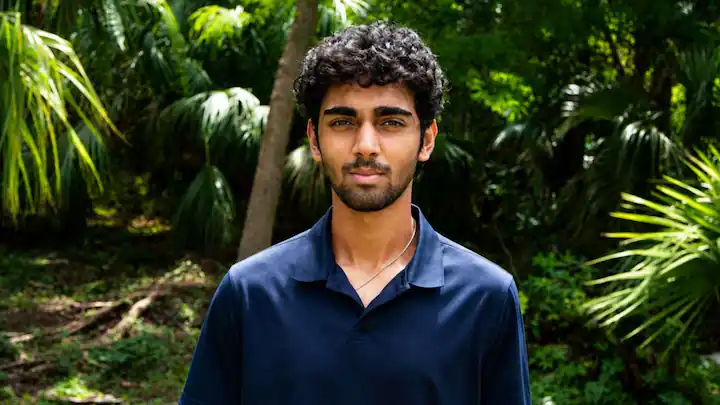
Most 18-year-olds are deciding which university to attend. Nathan Thomas, of Florida, was already teaching at one. A mother who nurtured his curiosity and a family of engineers who treated math as a puzzle fed an unusually accelerated appetite for learning: dual college enrollment at ten, a bachelor’s degree at sixteen, a master’s degree at eighteen.
In 2023, Nathan joined Miami Dade College as an engineering instructor at 18 years and 346 days old — the youngest male professor in recorded history, breaking a record that had stood since 1717. He now teaches while pursuing a law degree, and is candid that his own timeline isn’t a template for anyone else to copy.
Academic background: Dual enrollment at ten, associate degree at fourteen, bachelor’s with honours at sixteen, master’s at eighteen; now pursuing a law degree in intellectual property.
Strengths & traits: Sustained academic discipline across a decade of acceleration; comfortable setting his own pace rather than a conventional timeline.
Values & motivation: Motivated by continuing to learn, not by measuring up against a record — and actively discourages others from using his pace as their benchmark.
Career signals:
- Comfortable being the youngest or least experienced person in the room, repeatedly, without it slowing him down.
- Actively seeks to combine two different domains (engineering and law) rather than settle into one lane — a signal for hybrid careers.
6. Daksh Malik — The Boy Who Found an Asteroid by Following a School Email
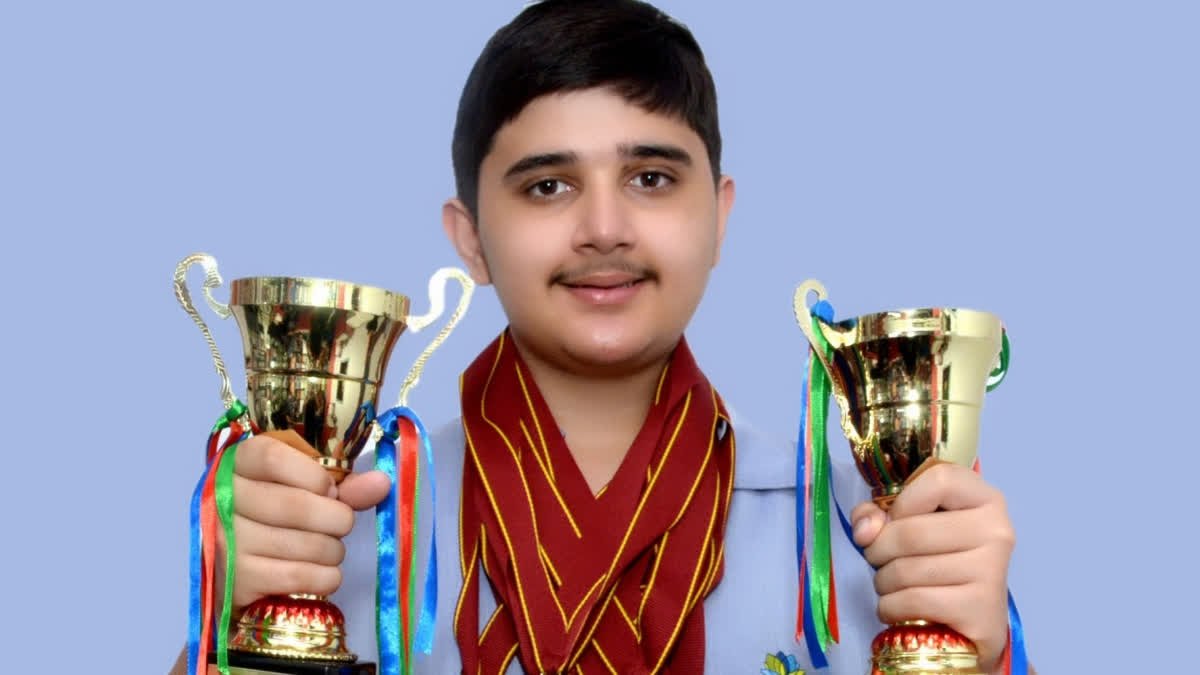
Daksh Malik, a ninth-grader from Noida, India, grew up watching documentaries about space. In 2022, an ordinary school email invited him to join the International Asteroid Discovery Program — a citizen-science initiative where students search real astronomical data for undiscovered objects.
His first attempt produced nothing, but taught him how professional astronomers work. He kept at it, and NASA eventually confirmed his discovery of a main-belt asteroid, provisionally designated 2023 OG40 — a real scientific contribution made through a school program, not a research institute.
Academic background: Student at Shiv Nadar School, Noida; search conducted through the International Astronomical Search Collaboration using NASA-linked data and Astronomica software.
Strengths & traits: Persistence through an unsuccessful first attempt; independently learned specialized scientific software.
Values & motivation: Interest in space predates the opportunity itself; kept going because the process felt like “working at NASA.”
Career signals:
- Motivated by the process as much as the outcome — fits careers with long feedback loops, like research or data analysis.
- Treated an early failed attempt as information, not a stopping point.
7. Nikola Veselinov — The Bulgarian Student Who Chased an Unsolvable Equation
Nikola Veselinov, a 17-year-old from Sofia, Bulgaria, became curious about equations of the form f(x) = a that mathematicians know cannot always be solved using elementary functions — but for reasons that had never been fully explained.
He combined topology, symmetry, and Galois theory to identify the underlying conditions that make these equations unsolvable, producing a new theorem serious enough to win the $75,000 Regeneron Young Scientist Award at the 2026 Regeneron ISEF, plus honours from the American Mathematical Society.
Academic background: Eleventh-grade student at the Sofia High School of Mathematics; project won first place in Mathematics and the overall Young Scientist Award.
Strengths & traits: Synthesized three distinct branches of advanced mathematics into one coherent argument; prefers proof over approximation.
Values & motivation: Aimed at explanation first, not application — motivated by discomfort with an unexplained gap rather than eventual physics uses.
Career signals:
- Prefers explaining why something is true over applying a known method — points toward pure research over applied engineering.
- Comfortable holding several abstract frameworks in mind at once — a strong fit for theoretical math, physics, or CS theory.
8. Team Plas-Stick — Three Teenagers Who Noticed a Child Drinking From a Plastic Container
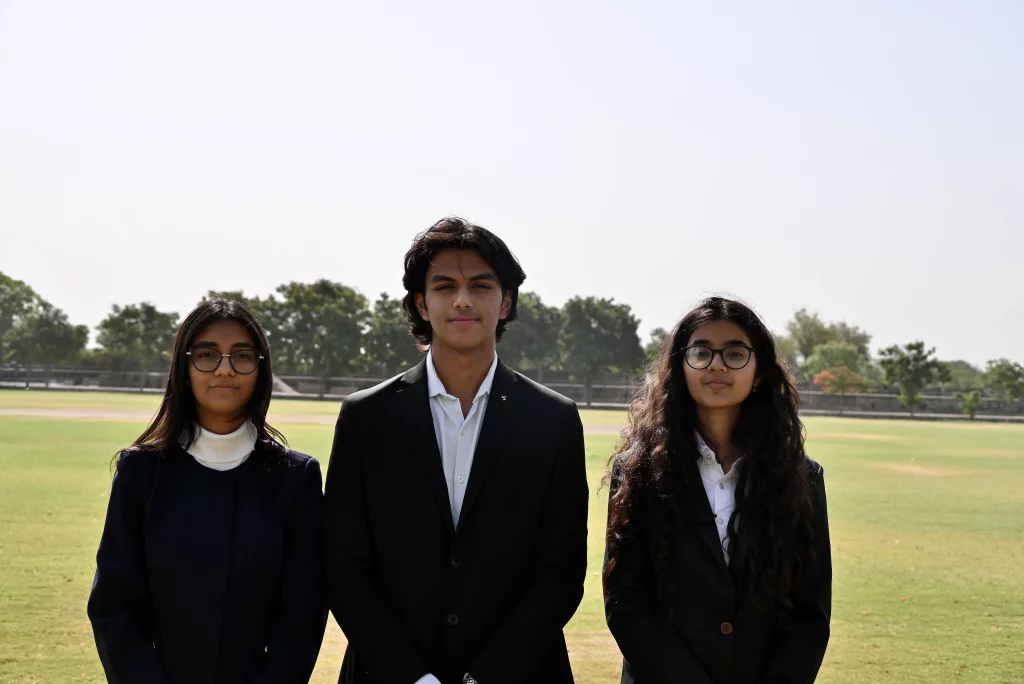
Vivaan Chhawchharia, Ariana Agarwal, and Avyana Mehta, all 16 and from Jaipur, India, saw a child drinking water from a shared plastic container in a rural community — water likely contaminated with invisible microplastics. That image became their question: could they remove microplastics without electricity or expensive equipment?
Working with researchers at IIT Guwahati, the team developed Plas-Stick, a biodegradable powder from discarded tamarind seeds that binds microplastics into clumps removable with a handheld magnet. Their invention won the 2026 Earth Prize, the world’s largest environmental competition for teenagers — the first Indian team to take the global title.
Academic background: Students at Jayshree Periwal International School, Jaipur; cold-emailed an IIT Guwahati materials scientist, later earning a formal Letter of Endorsement from the Udgam Incubation Centre.
Strengths & traits: Sought expert validation on their own initiative; balanced chemical rigour against a hard practical constraint — no electricity, no expensive equipment.
Values & motivation: Idea began with a witnessed inequity, not an assigned prompt. Each has a different stated future direction — Avyana toward environmental policy, Vivaan toward finance and sustainability, Ariana toward green finance — but share the instinct to keep solving problems for overlooked communities.
Career signals:
- Reacted to a witnessed problem with “how do we fix this,” not “someone should fix this” — a founder-track signal.
- One shared project branching into three different stated career directions — proof a single strong “why” can lead multiple places, not just one.
The Thread That Connects Them
Look closely at these eight stories and a pattern emerges. None of these young people were told to become scientists, engineers, mathematicians, or inventors. They became those things because they noticed something ordinary—a returning butterfly, a folded leaf, a cluttered bedroom, an old telescope’s forgotten data, a school email, an unsolved equation, a child drinking unsafe water—and refused to look away from it.
Careers, it turns out, rarely announce themselves. They accumulate, one unanswered question at a time, in the hands of people patient enough to keep asking. If there is a lesson here for any young person still waiting for their “path” to reveal itself, it might be this: stop looking for the path. Follow the question you can’t stop asking. The direction has a way of finding you.
What’s the question you can’t stop asking? It might be smaller than a Guinness World Record or a NASA-confirmed asteroid—and that’s fine. Every story above started exactly that small. Sit with your own question a little longer this week, follow it one step further than usual, and see where it leads. If this piece resonated, share it with a young person who needs the reminder that curiosity is allowed to come first.
Ready to explore where your own curiosity could lead? Visit careerreform.in to start turning your questions into a direction.