


Poland is worth considering for Indian students looking to pursue an undergraduate degree in Europe. Its universities offer English-taught programmes in engineering, IT, business and selected medical fields, with tuition fees that may be comparatively affordable.
Before applying, students should understand admission requirements, living costs, certificate recognition and visa procedures. This guide covers the essentials for planning your studies in Poland in 2027.
Planning to study in Poland?
Get the Study In Poland e-book to keep handy as you research your options. Open the Digital Library, select the Poland guide at the top and enter your details to download.
Why Study in Poland?
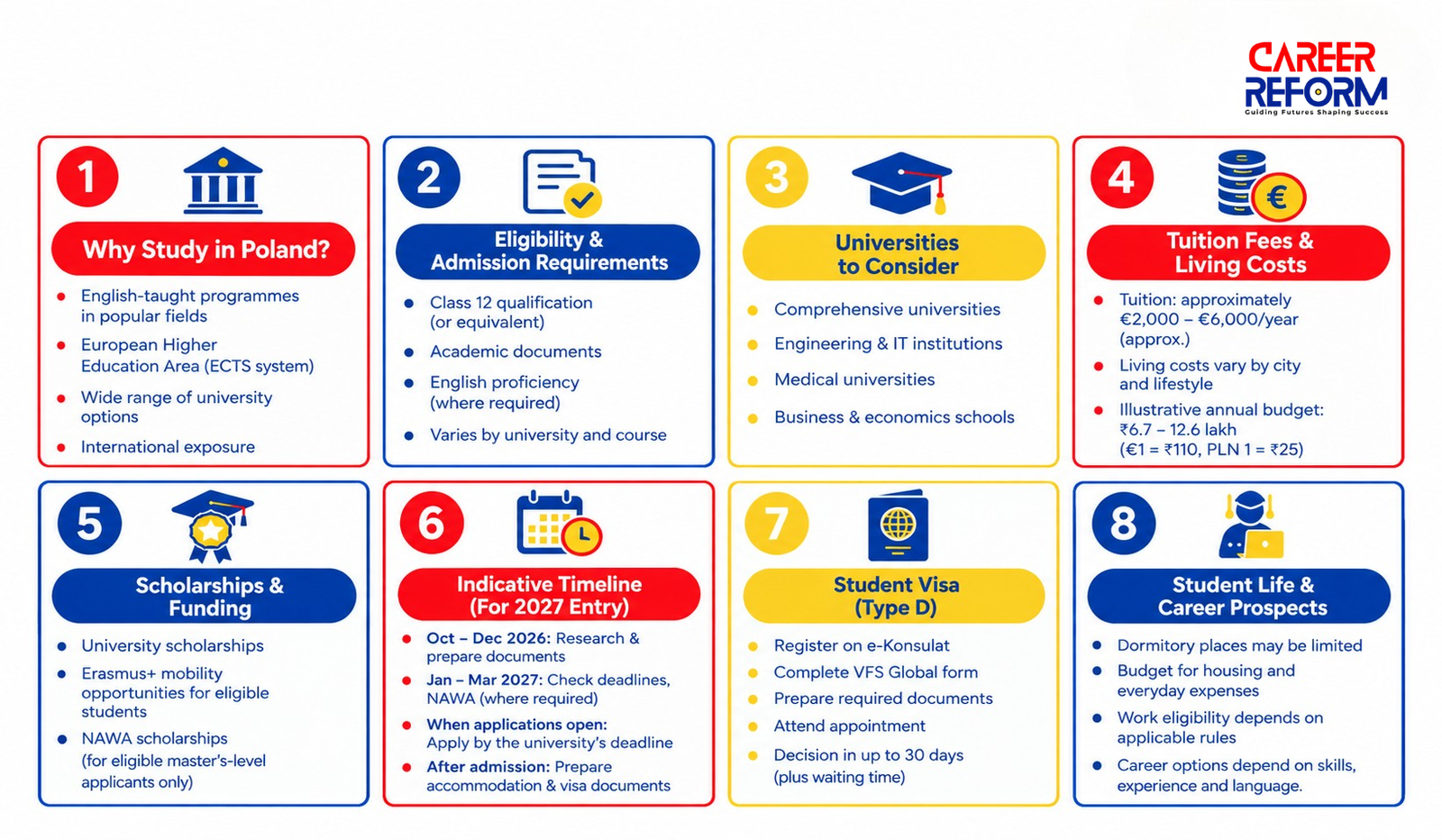
- English-taught programmes: Explore degrees in engineering, computer science, business and other fields.
- European education: Poland participates in the European Higher Education Area and uses the ECTS credit system.
- University options: Choose from comprehensive universities, technical institutions, business schools and medical universities.
- International exposure: Experience a new culture while developing academic and personal skills.
Explore courses through the official Study in Poland portal.
Eligibility and Admission Requirements
Undergraduate applicants generally need a recognised Class 12 qualification or equivalent. Universities may also require:
- Academic certificates and marksheets
- English-language proficiency evidence, where required
- A valid passport and application form
- Relevant subject prerequisites, entrance tests or interviews
Requirements vary by course, so check your chosen university’s admissions page before applying.
NAWA Certificate Recognition
Many Indian applicants need a recognition statement from Poland’s National Agency for Academic Exchange (NAWA) to confirm that their school-leaving qualification permits them to apply for higher education. Some qualifications may be exempt.
Where applicable, apply through the SYRENA system and follow NAWA’s official guidance. The statement is free, but processing times vary.
Indian educational documents may also require authentication and apostille. Check the Indian Ministry of External Affairs guidance and the Polish visa checklist.
Universities to Consider
Use this shortlist as a starting point, not a ranking. Confirm the programme, language of instruction, fees and 2027/28 admission dates directly with each university.
| Field | Universities |
|---|---|
| Comprehensive universities | University of Warsaw, Jagiellonian University, Adam Mickiewicz University |
| Engineering and IT | Gdańsk University of Technology, Warsaw University of Technology, AGH University of Kraków |
| Medicine | Medical University of Warsaw, Medical University of Gdańsk |
| Business and economics | SGH Warsaw School of Economics, Kozminski University |
Search for programmes through the official Study Finder.
Considering medicine? Review the applicable National Medical Commission (NMC) requirements before enrolling. NEET-UG qualification alone does not guarantee eligibility for medical registration in India. Consult the NMC website.
Tuition Fees and Living Costs
The official Study in Poland portal lists typical international tuition fees of approximately €2,000–€6,000 per year, although some programmes cost more. It estimates living expenses at around PLN 1,500–2,000 per month.
Using illustrative exchange rates of €1 = ₹110 and PLN 1 = ₹25:
| Expense | Estimated cost |
|---|---|
| Annual tuition | ₹2.2–6.6 lakh |
| Monthly living expenses | ₹37,500–50,000 |
| Annual living expenses | ₹4.5–6 lakh |
| Estimated annual total | ₹6.7–12.6 lakh |
These are planning estimates, not guaranteed costs. Actual expenses depend on the city, accommodation and lifestyle. Flights, visa charges, document processing, accommodation deposits and emergency funds require a separate budget.
Check the official tuition guidance and cost-of-living guidance.
Scholarships and Funding
Explore these options, depending on your eligibility:
- University scholarships: Ask institutions about merit awards and tuition discounts for international bachelor’s students.
- Erasmus+: Eligible students may access exchange or mobility opportunities through participating institutions.
- NAWA scholarships: Check each scheme’s eligibility and funding conditions. The Banach NAWA Programme is for eligible master’s-level students, not a general bachelor’s scholarship.
Confirm current deadlines and award conditions through official sources. Do not rely on unconfirmed funding when planning your budget.
Application Timeline for 2027 Entry
Poland’s academic year generally begins in October, but application deadlines vary by university and programme.
- October–December 2026: Research courses, check eligibility and prepare documents.
- January–March 2027: Monitor admissions pages, arrange language-test evidence and begin NAWA recognition procedures where required.
- When applications open: Apply through the university’s official recruitment system and follow the programme-specific deadline.
- After admission: Confirm fees, arrange accommodation and prepare your visa application.
- Before departure: Complete the visa process and confirm your travel and accommodation arrangements.
Not all universities have published their 2027/28 deadlines yet. Do not assume dates from the previous intake will remain the same.
Student Visa for Indian Applicants
Indian students pursuing a long-term degree in Poland generally need a type D national visa.
Application steps
- Check the correct Polish consular jurisdiction for your residence.
- Register through e-Konsulat.
- Complete the additional form through the VFS Global portal.
- Prepare the documents required by the latest official checklist and attend your appointment.
Key documents
Depending on your circumstances, the checklist includes:
- Valid passport and completed visa application
- University admission confirmation
- Educational certificates and applicable NAWA recognition documents
- Required apostilles and document authentication
- Language-proficiency evidence meeting the university’s requirement and the checklist’s minimum B2 level
- Proof of tuition payment or confirmation that the course is free
- Accommodation details and associated costs
- Proof of sufficient funds for living expenses, accommodation and return travel
- Qualifying medical insurance, generally requiring at least €30,000 in coverage
- A one-way flight itinerary reservation
The current checklist specifies financial evidence for living costs, accommodation and return travel. It lists PLN 1,010 per month for living expenses and PLN 2,500 for return travel, alongside accommodation costs, subject to its documentary requirements.
Allow up to 30 calendar days for a visa decision, plus appointment waiting time and document preparation. Check the latest official Polish study-visa guidance for India and consular fees before applying.
Student Life and Career Prospects
University dormitories may be more economical than private rentals, but availability is limited. Budget for food, transport, winter clothing and initial accommodation costs. Learning basic Polish can make everyday life easier.
International students may be eligible to work under certain conditions. Check the rules applicable to your immigration status, and do not rely on part-time work to cover essential study costs.
Career opportunities after graduation depend on your qualification, experience, language skills and immigration status. If you plan to return to India or enter a regulated profession, verify recognition and licensing requirements before choosing your course.
Before You Apply: Quick Checklist
- Confirm programme availability, eligibility and 2027/28 deadlines.
- Calculate tuition, living expenses and additional costs.
- Check NAWA recognition and apostille requirements.
- Research scholarships and confirm eligibility.
- Review the latest visa checklist and financial requirements.
- Arrange accommodation and an emergency fund.
Final Thoughts
Studying in Poland can be a valuable opportunity when your chosen course, budget and career goals align. Research universities carefully, prepare documents early and confirm admission and visa requirements before making financial commitments.
Planning to study abroad? Explore CareerReform for practical guidance to help you compare destinations and make informed education decisions.