

|
Getting your Trinity Audio player ready...
|
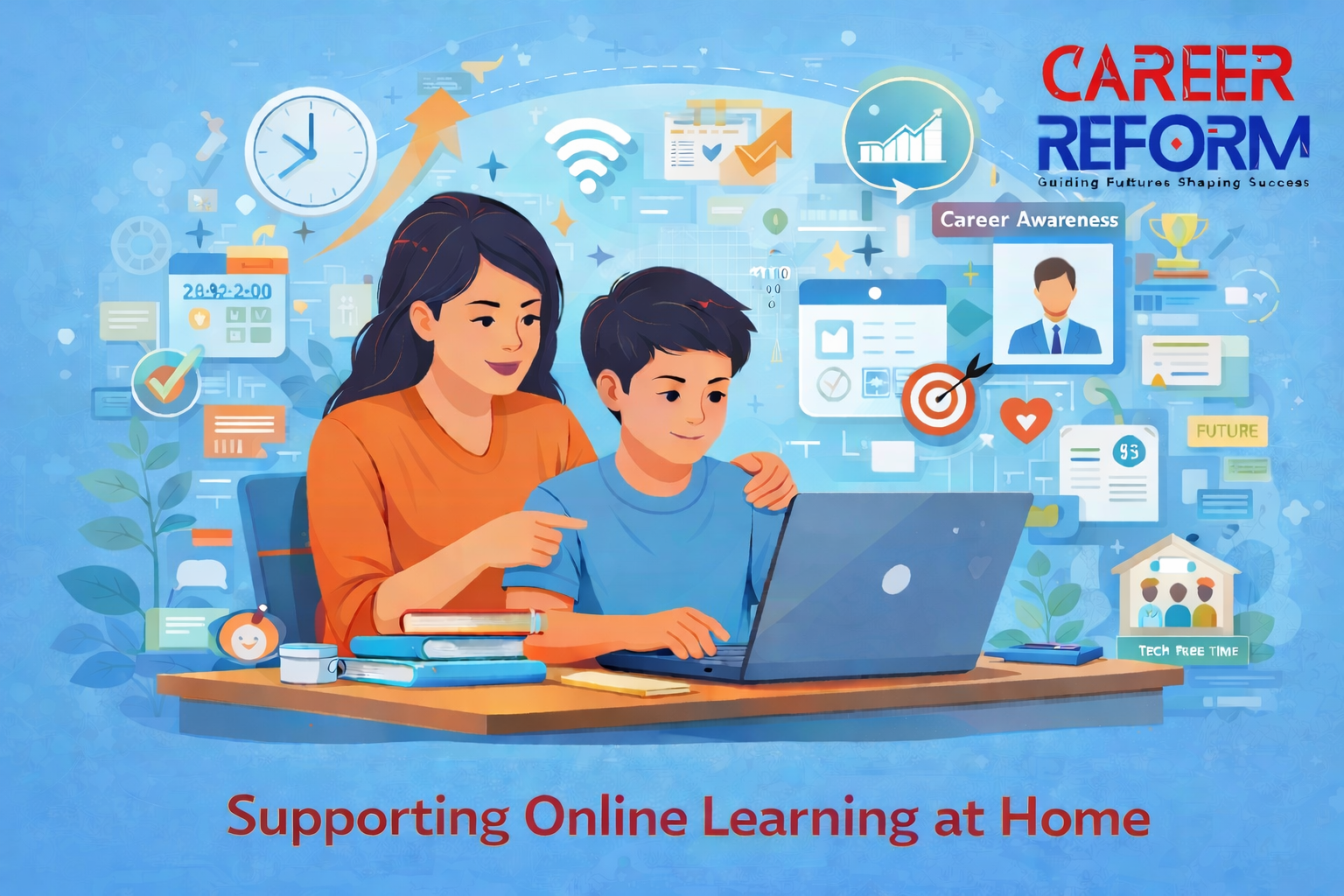
Online education has moved from being a backup option to becoming a core part of how students learn today. From K12 education to online certifications for young professionals and career changers, online learning at home is shaping academic journeys and future careers.
However, learning from home is not just about screens, platforms, and virtual classrooms. It requires structure, motivation, emotional reassurance, and clarity of purpose—elements that cannot be delivered by technology alone.
This is where parental support becomes essential. The way parents organise the home environment, respond to challenges, and engage in learning conversations often determines whether online education feels overwhelming or empowering.
This guide helps parents understand their evolving role in distance learning and offers practical, realistic ways to support learning—without stress, pressure, or micromanagement—so students can stay focused, confident, and future-ready in a digital-first world.
The New Reality Of Learning: Why Parents Matter More Than Ever
Online and distance learning offer flexibility, but they also demand self-discipline, motivation, and clarity—skills that many learners are still developing.
According to a hypothetical global learning trends report (2024):
- Students with consistent parent involvement show 35% higher engagement
- Dropout rates in distance learning have reduced by nearly 30%
- Emotional support at home improves focus and learning confidence
In online learning, parents are no longer just caretakers. They are environment designers, emotional anchors, and learning facilitators.
Understanding The Challenges of Online Learning at Home
Before offering solutions, it’s important to recognise what students often struggle with:
- Lack of routine and structure
- Digital distractions (social media, games, multitasking)
- Reduced peer interaction
- Motivation dips and screen fatigue
- Unclear learning goals, especially for older students
Acknowledging these challenges helps parents respond with empathy rather than pressure.
Creating a Supportive Learning Environment
A strong foundation starts with the right environment.
1. Designate a Dedicated Learning Space
It doesn’t need to be fancy—just consistent.
- Quiet corner with minimal distractions
- Comfortable seating and proper lighting
- All learning materials are within reach.
This signals to the brain: “This is my learning zone.”
2. Establish a Daily Routine
Structure brings stability.
- Fixed class hours
- Scheduled breaks
- Time for revision and reflection
For younger students, routines reduce anxiety. For older learners, they build self-discipline.
How Parents Can Support Without Micromanaging
The goal isn’t control—it’s guidance.
1. Encourage Independence
Instead of constant monitoring:
- Ask what they learned today
- Help them plan weekly goals
- Let them manage assignments, stepping in only when needed
This builds confidence and accountability—essential skills for higher education and careers.
2. Be Emotionally Available
Online learning can feel isolating.
- Listen without judgement
- Normalise frustration and setbacks
- Celebrate small wins
Sometimes, encouragement matters more than instructions.
The table below summarises practical, stress-free ways parents can support online learning at home and the positive impact it creates for students.
| Area of Support | What Parents Can Do | Impact on the Student |
| Learning Environment | Create a quiet, consistent study space with proper lighting and minimal distractions | Improves focus, reduces fatigue, and builds a learning habit |
| Daily Routine | Set fixed class timings, breaks, and study hours | Enhances time management and reduces stress |
| Parental Involvement | Check in regularly without micromanaging | Builds confidence and independence |
| Emotional Support | Listen actively, acknowledge challenges, encourage effort | Reduces anxiety and boosts motivation |
| Screen Time Balance | Encourage offline breaks, physical activity, and screen-free family time | Improves mental health and concentration |
| Goal Setting | Help students set weekly or monthly learning goals | Creates clarity and purpose in learning |
| Career Awareness | Discuss how learning connects to future careers and skills | Increases relevance and long-term engagement |
| Digital Discipline | Teach responsible use of devices and online platforms | Minimises distractions and improves productivity |
Supporting Different Age Groups Effectively
For K12 Education (School Students)
- Sit with younger children initially to help them navigate platforms
- Use visual schedules and reminders
- Communicate regularly with teachers
For Teenagers and Young Professionals
- Shift focus from supervision to mentorship
- Discuss how current learning connects to future careers
- Encourage skill-based learning beyond school syllabus
This is where platforms like CareerReform.in play a key role—helping families connect education with real-world career pathways early on.
Managing Screen Time and Digital Well-being
More learning online doesn’t mean unlimited screen exposure.
Helpful strategies:
- Follow the 20-20-20 rule (every 20 minutes, look 20 feet away for 20 seconds)
- Encourage offline activities: reading, journaling, physical movement
- Maintain tech-free family time
Balanced digital habits support both learning and mental health.
A Real-Life Story: When Support Changed the Outcome
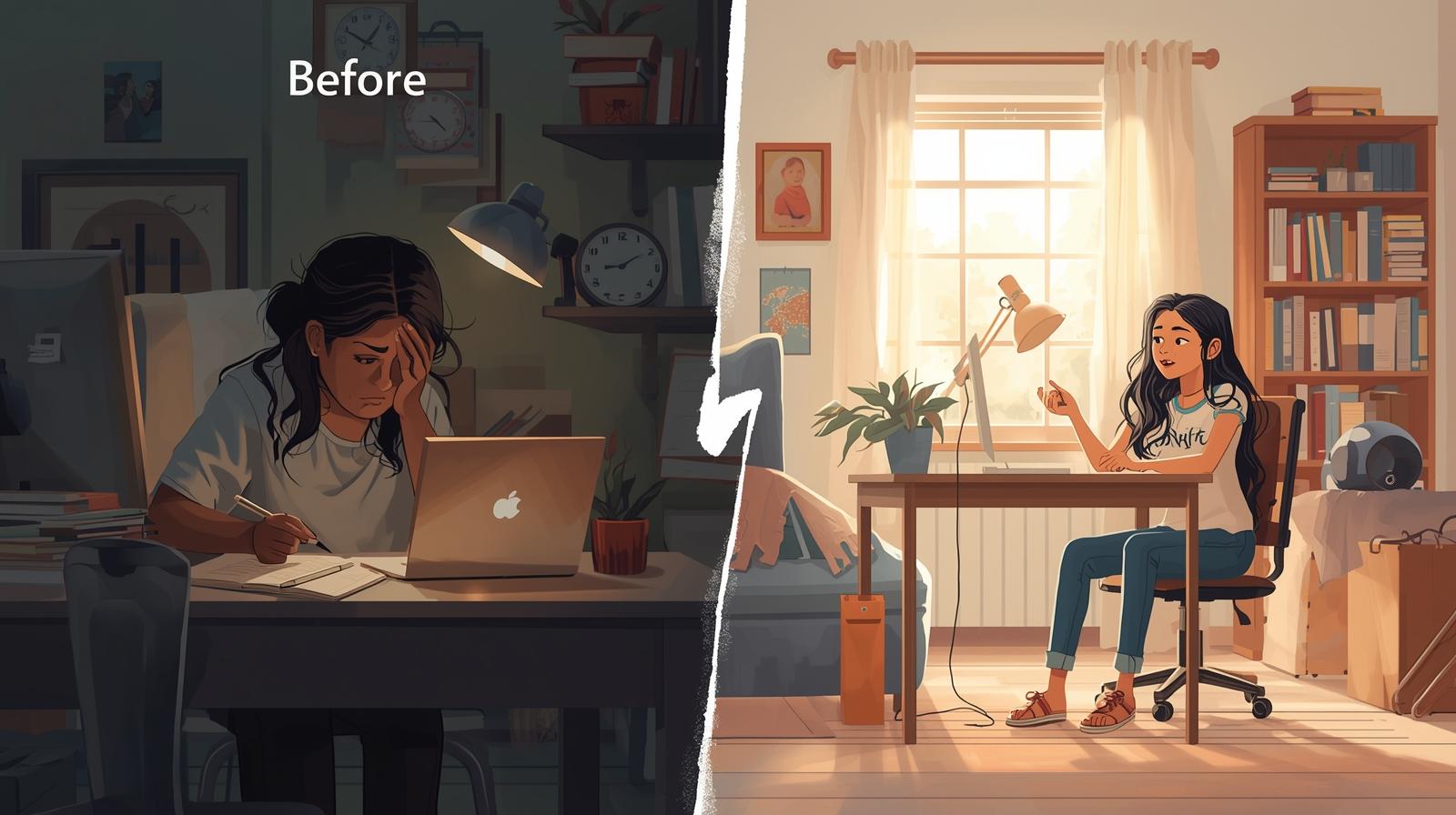
When Neha, a Class 11 student, shifted to online classes, her parents noticed something worrying. She attended every session but seemed disengaged, anxious, and exhausted. Her grades dipped—not due to lack of ability, but lack of structure.
Instead of increasing pressure, her parents made three simple changes:
- A fixed study routine
- A quiet learning corner
- Short daily conversations about what she learned, not what she scored
Within a month, Neha felt more in control. Her confidence returned, participation improved, and learning became meaningful again. This is the quiet power of supportive parental involvement.
This story reflects what many families experience: small, thoughtful involvement can make a big difference.
Supporting Learning Beyond The Screen
Supporting online learning at home is not about constant supervision—it is about creating a space where learning feels structured, supported, and purposeful. When parents focus on routines, emotional reassurance, and meaningful conversations, students develop confidence, self-discipline, and clarity that extend far beyond virtual classrooms.
One of the most valuable outcomes of this approach is that students gradually learn to take ownership of their learning. Instead of studying only to meet expectations, they begin to understand why they are learning, how it connects to their interests, and where it can take them in the future. This shift from external pressure to internal motivation is essential for long-term success.
As education continues to evolve, families that treat learning as a shared journey are better prepared for change. At CareerReform.in, we help parents and learners connect education with future-ready skills and career clarity—so online learning becomes a foundation for informed choices and lifelong growth.
Because when learning is supported at home, success goes far beyond the screen.
Sania Q