

|
Getting your Trinity Audio player ready...
|
Summer break is often seen as a pause button, time to relax, travel, or simply escape routines. But for families, students, and even young professionals, it can also be a powerful opportunity for growth, discovery, and creativity—without textbooks or pressure.
The good news? Learning doesn’t have to look like school to be meaningful. When approached intentionally, summer break activities for kids (and adults!) can spark curiosity, build real-world skills, and create memories that last far longer than a worksheet ever could.
At CareerReform.in, we strongly believe in learning through play, exploration, and hands-on experiences—especially during breaks. Let’s explore how to make summer break both fun and enriching.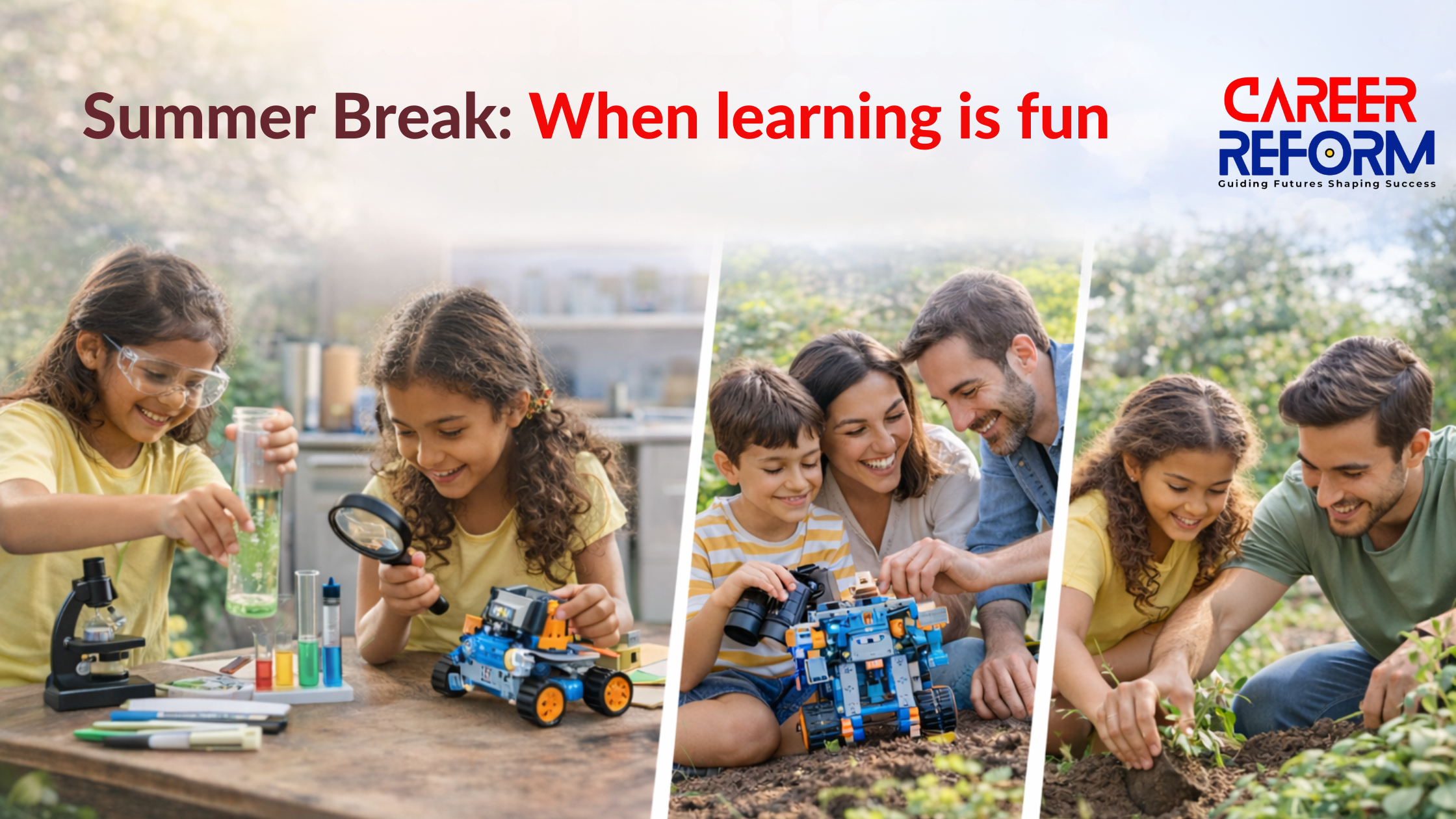
Why Summer Break Is an Ideal Time for Learning Through Play
During the academic year, learning is often structured and outcome-driven. Summer break removes that pressure, allowing curiosity to take the lead.
Key Benefits of Learning During Breaks
- Reduced stress improves creativity and memory
- Informal learning strengthens intrinsic motivation
- Family-led activities build emotional and social skills
- Real-world exposure improves practical understanding
According to research summarized by the National Research Council (USA), learners retain significantly more information when they actively participate rather than passively consume content. Experiential and hands-on learning methods can improve retention by 2–3 times compared to traditional instruction (indicative data).
Read more:
https://www.edutopia.org/article/how-use-play-learning/
Summer Break Activities for Kids That Feel Like Play (But Build Skills)
1. Hands-On Learning at Home: Small Projects, Big Impact
Hands-on learning helps children connect ideas with action. These activities improve fine motor skills, logical thinking, and creativity.
High-impact ideas:
- DIY crafts using recycled materials (teaches sustainability)
- Cooking or baking together (math, sequencing, chemistry)
- Simple science experiments (cause-and-effect thinking)
- Budget-based shopping or planning activities (financial literacy)
These activities align strongly with learning through play, making them ideal summer break activities for kids.
2. Museums, Science Centres & Cultural Experiences
Museums turn abstract concepts into tangible experiences. Whether physical or virtual, they expose learners to history, innovation, and global perspectives.
Educational benefits include:
- Visual learning and memory reinforcement
- Curiosity-driven questioning
- Exposure to STEM, arts, and culture
- Improved observational skills
Recommended resources:
- National Science Centre, India – https://nscd.gov.in
- Google Arts & Culture (virtual tours) – https://artsandculture.google.com
Virtual tours are excellent alternatives for families seeking accessible, low-cost family activities.
3. Nature-Based Learning & Outdoor Exploration
Nature supports emotional regulation, problem-solving, and environmental awareness. Studies suggest that children who spend regular time outdoors show better attention spans and emotional balance (hypothetical synthesis based on environmental education research).
Nature-based summer break ideas:
- Nature scavenger hunts
- Gardening or composting projects
- Birdwatching with simple logs
- Short hikes with observation challenges
These activities strengthen scientific thinking while encouraging mindfulness and physical health.

Skill-Based Summer Break Challenges for Future Readiness
Summer break is a great time to introduce life and career skills without pressure.
4. Mini Skill Explorations (Ages 8+ to Young Adults)
Skill areas to explore:
- Basic coding through games (Scratch, Blockly)
- Storytelling, blogging, or journaling
- Photography or video storytelling
- Public speaking via short family presentations
Useful platforms:
Summer Break Isn’t Just for Kids: Teens, College Students & Career Changers
Learning during summer break is equally valuable for older learners.
5. Career & Self-Discovery Activities
Effective ideas include:
- Short online certification courses
- Volunteering or community service
- Job shadowing or informational interviews
- Reflective journaling on interests and strengths
According to career development studies, individuals who explore career options early are more confident and less likely to switch paths impulsively later.
Suggested platforms:
How to Plan Summer Break Learning Without Overloading
To keep learning enjoyable:
- Avoid rigid schedules
- Limit activities to 1–2 per day
- Combine movement, creativity, and thinking
- Focus on reflection, not assessment
Ask simple questions like:
- “What surprised you today?”
- “What would you like to try again?”
This keeps learning light, personal, and meaningful.
Ready to Turn This Break Into a Breakthrough?
Summer break doesn’t need more pressure—it needs better direction. With the right guidance, simple activities can become powerful learning experiences that shape confidence, skills, and future choices.
If you’re wondering:
- Which activities suit your child’s age and interests
- How to balance fun with meaningful learning
- How today’s experiences connect to future academic or career paths
CareerReform.in is here to help.
Our experts work closely with families, students, and young professionals to create personalised learning and career roadmaps—starting from small moments like school breaks and growing into long-term clarity.
Sania Q