

|
Getting your Trinity Audio player ready...
|
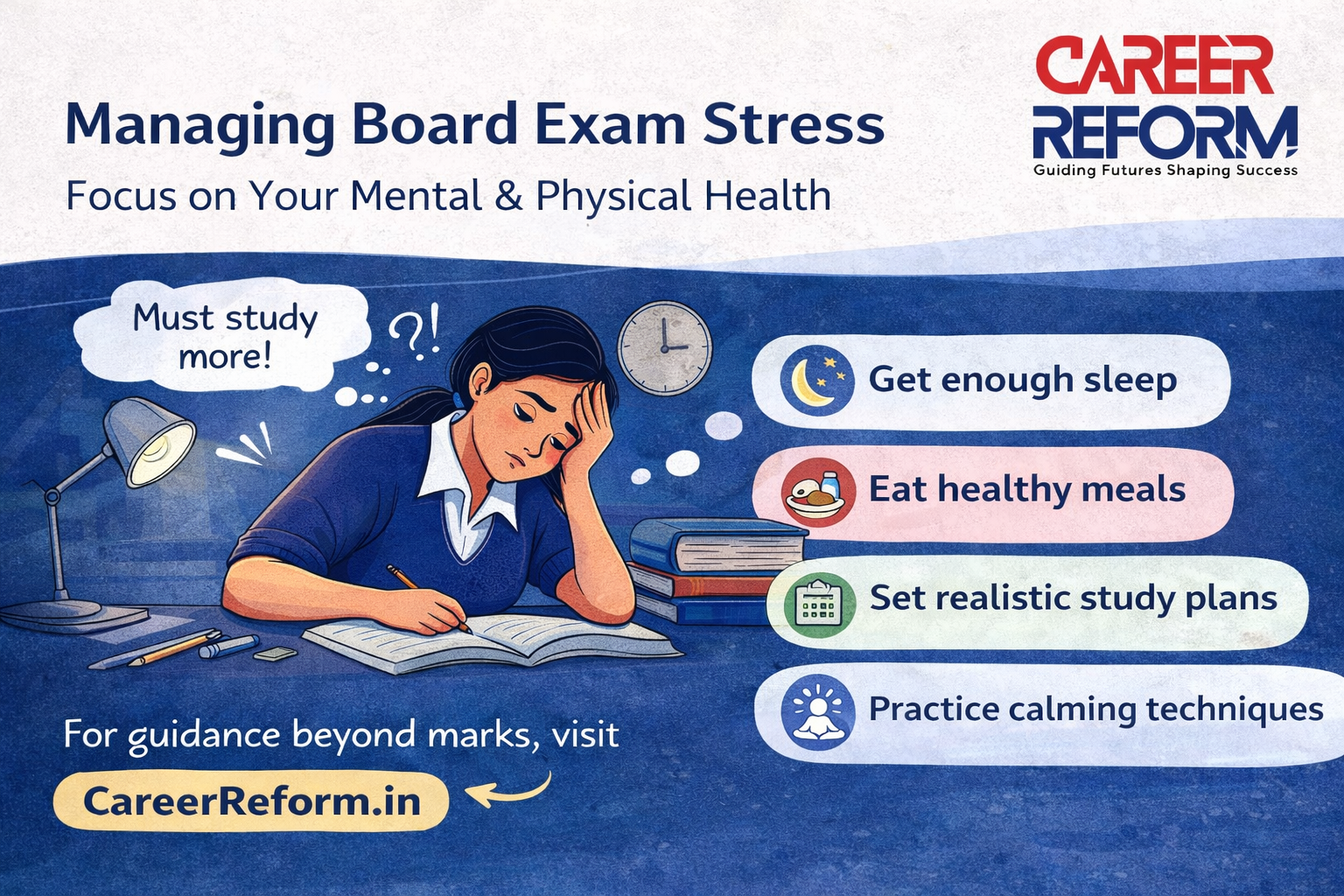 Board exams are often described as a “make-or-break” phase—but for millions of students, they feel more like a pressure cooker. Long study hours, constant comparisons, parental expectations, and fear of failure can turn exam season into a mentally and physically exhausting experience.
While a certain level of stress is normal and even motivating, unmanaged board exam stress can harm focus, memory, health, and confidence. The good news? With the right strategies, students can prepare effectively without sacrificing their well-being.
This guide explores how to manage student anxiety, maintain healthy study habits, and protect both mind and body during exam season.
Why Board Exam Stress Feels So Overwhelming
Board exams carry high emotional weight because students often believe their entire future depends on a few papers. This belief—though common—is misleading and damaging.
Common sources of exam stress include:
- Fear of disappointing parents or teachers
- Constant comparison with peers
- Overloaded syllabi and time pressure
- Irregular sleep and poor nutrition
- Lack of clarity about career paths beyond exams
These factors can lead to heightened anxiety, difficulty concentrating, and even physical symptoms like headaches and sleep disturbances. Stories of students feeling panicked during exam months are not uncommon, and the pressure can feel overwhelming.
Reference / Further Reading:
UNICEF India – Adolescent Mental Health
How Exam Stress Affects Mental and Physical Health
Stress doesn’t stay in the mind—it shows up in the body too.
Mental health effects:
- Difficulty concentrating or remembering concepts
- Increased irritability or mood swings
- Negative self-talk (“I’m not good enough”)
- Fear of exams despite preparation
Physical health effects:
- Sleep deprivation and fatigue
- Digestive issues or loss of appetite
- Frequent headaches or body aches
- Weakened immunity during exams
Ignoring these signs can reduce exam performance rather than improve it.
When Studying Hard Isn’t Enough: A Board Exam Story
Two weeks before her Class 10 board exams, Ananya, a CBSE student, was following a routine familiar to many Indian households—early-morning tuition, school assignments, late-night revision, and constant reminders to “work harder.”
Although she was studying for hours, she slept barely five hours a night, skipped breakfast, and felt anxious even in subjects she had prepared well. Her parents noticed that the more she studied, the more worried she became. One evening, after blanking out during a revision test, Ananya broke down. It wasn’t lack of effort—it was burnout.
With small changes—structured study hours, proper sleep, regular meals, and reassurance that board exams were important but not the only measure of success—her anxiety reduced. By exam day, she felt calmer, focused, and mentally present.
Like many Indian students, Ananya realised that taking care of her health actually improved her performance. Stories like this are common during board exam season—and they show why managing stress is just as important as finishing the syllabus.
Practical Exam Preparation Tips That Reduce Stress
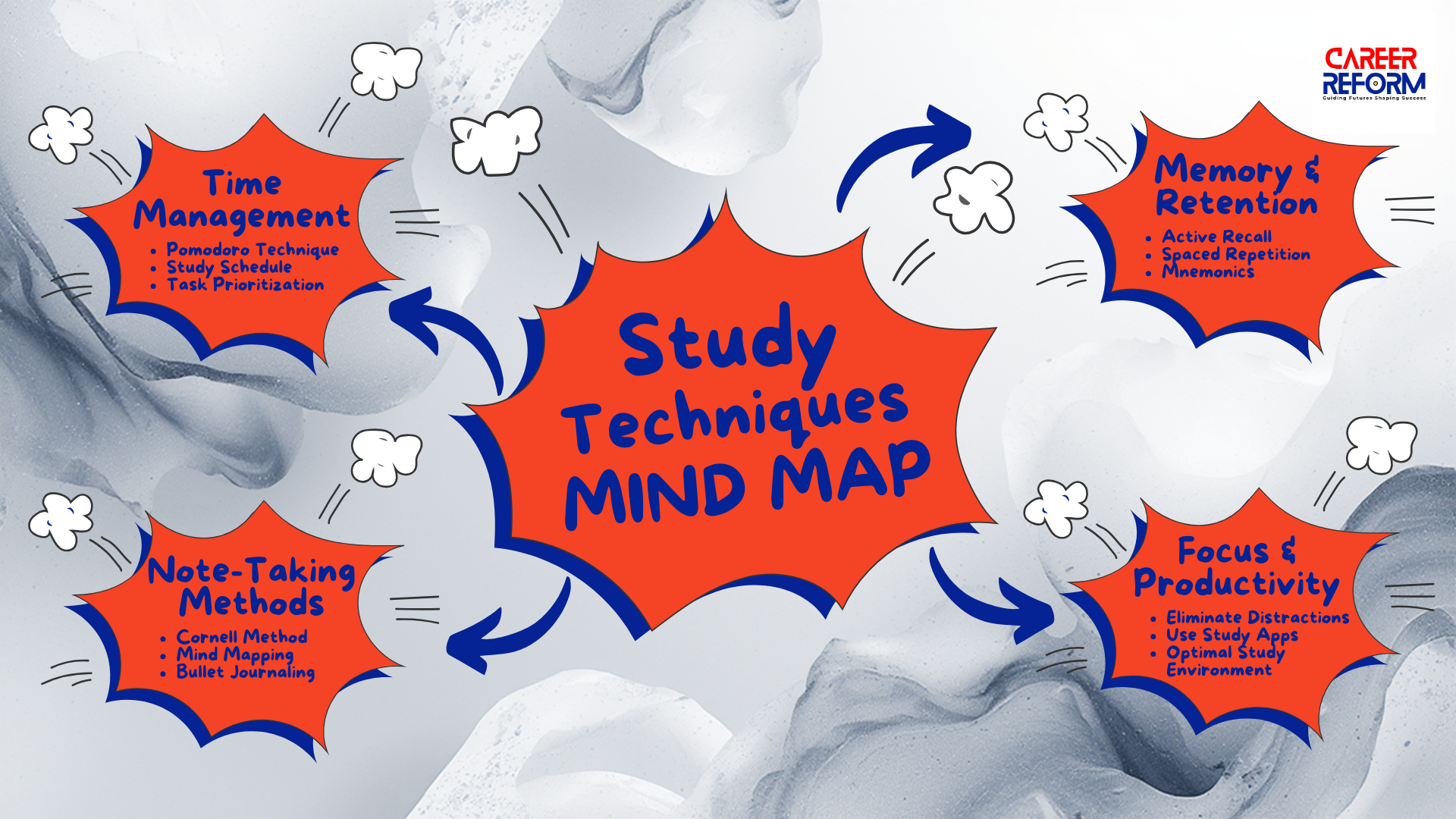
Effective preparation isn’t about studying longer—it’s about studying smarter.
1. Create a realistic study plan
- Break the syllabus into daily, manageable goals
- Mix difficult subjects with easier ones
- Include buffer days for revision and rest
A well-structured plan lowers anxiety by replacing uncertainty with clarity.
2. Focus on understanding, not memorising
- Use diagrams, flowcharts, and summaries
- Teach concepts aloud as if explaining to a friend
- Practice previous years’ papers to reduce exam fear
Healthy Study Habits That Protect Your Mind
Small habits, practised consistently, make a big difference.
Key healthy study habits:
- Study in 45–50 minute blocks with short breaks
- Avoid multitasking with phones or social media
- Study at the same time daily to build a routine
- Keep your study space clean and well-lit
Consistency builds confidence—and confidence reduces stress.
Managing Stress Through Sleep, Nutrition & Movement
Sleep: Your secret weapon
Research published by PMC shows that students who sleep 7–8 hours perform better in memory-based exams than those who stay up late revising.
Tips:
- Avoid late-night cramming before exams
- Stop screen use at least 30 minutes before bed
- Maintain a fixed sleep-wake cycle
Nutrition: Fuel your brain
- Eat balanced meals with fruits, vegetables, and proteins
- Stay hydrated—dehydration increases fatigue
- Limit caffeine and junk food during exam weeks
Movement matters
Even 15–20 minutes of light exercise or walking can reduce stress hormones and improve focus.
Simple Techniques to Manage Student Anxiety
When anxiety peaks, quick calming tools help regain control.
Try these:
- Deep breathing: Inhale for 4 seconds, exhale for 6
- Grounding exercise: Name 5 things you can see, 3 you can hear
- Positive reframing: “I am prepared enough to try my best.”
If anxiety feels overwhelming or persistent, talking to a counsellor is a sign of strength—not weakness.
Remember: Exams Are Important, But Not Your Identity
One exam cannot define your intelligence, worth, or future success.
At CareerReform.in, we regularly work with students who:
- Excelled later despite average board scores
- Found clarity through guided career counselling
- Discovered multiple pathways beyond traditional mark-based definitions
Career guidance helps students see options, not dead ends, reducing pressure long before exams begin.
How we support students during Exam Season
CareerReform.in focuses on long-term confidence, clarity, and well-being, not just short-term results.
Our support includes:
- Career counselling that reduces fear of “failure.”
- Guidance on subject choices and alternative pathways
- Resources that help parents support student’s health
- Mindset-focused mentoring beyond marks
When students understand that their future has many doors, exam stress naturally becomes more manageable.
Balance Is The Real Success Strategy
Board exams matter—but your health matters more. Managing stress, maintaining healthy study habits, and caring for sleep and nutrition aren’t distractions from success; they are the foundation of it.
Preparation works best when the mind is calm, the body is rested, and the heart feels supported.
If exam season feels overwhelming, remember:
You don’t have to handle it alone—and your future is bigger than a report card.
Feeling overwhelmed by exams? CareerReform.in helps students gain clarity, confidence, and calm—beyond marks. Explore guided career counselling today.
Sania Q